
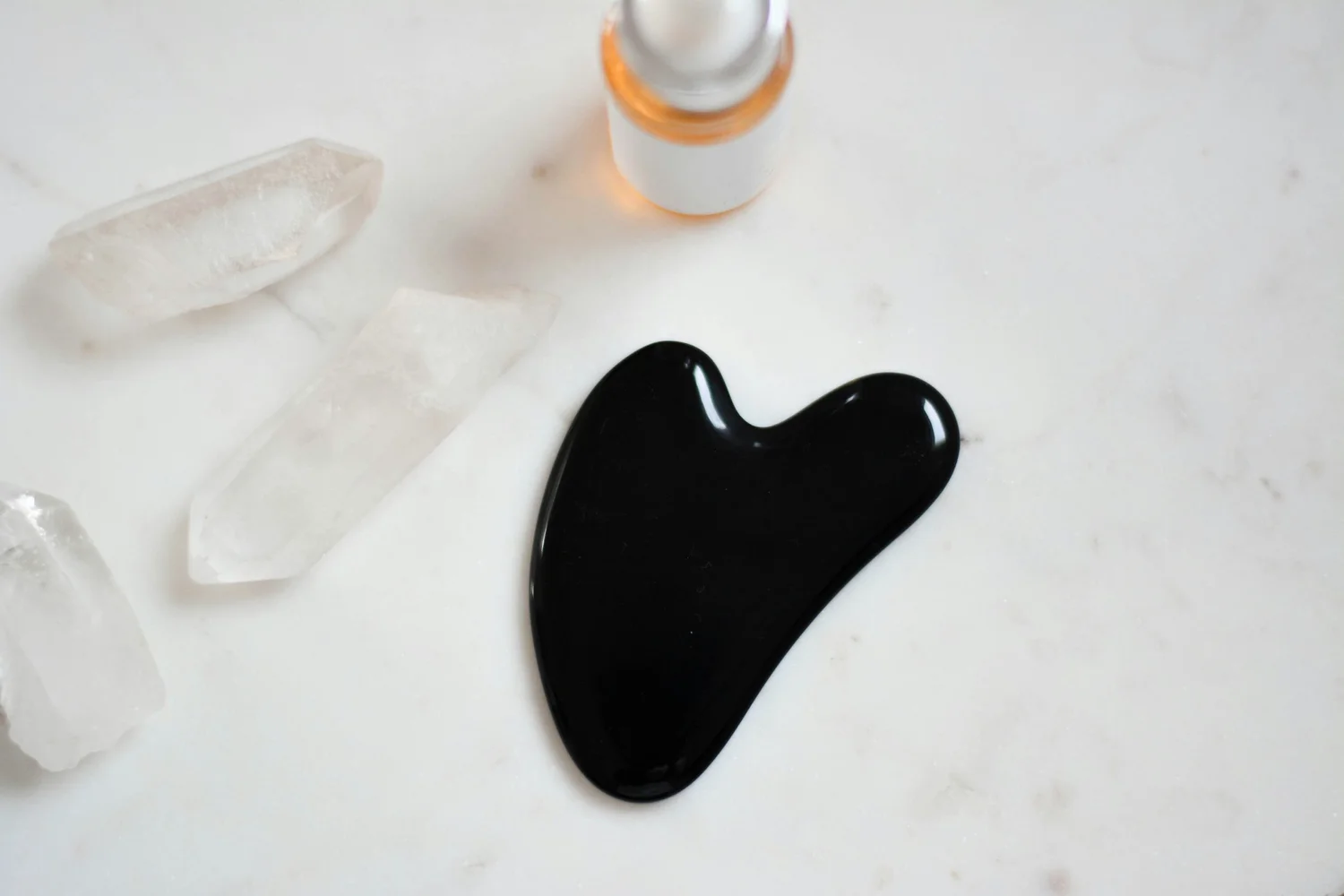
Gua Sha in Portland, Maine
A traditional Chinese medicine technique for pain relief, chronic tension, and scar tissue release. Used alongside acupuncture to extend and deepen treatment.
What is Gua Sha?
Gua sha is a traditional Chinese medicine technique that involves pressing a smooth tool firmly along the surface of the skin in long, deliberate strokes. “Gua” means to scrape or press-stroke; “sha” refers to the redness and petechiae that appear on the skin as a result. Used for thousands of years as a core tool in Chinese medicine, gua sha works by stimulating circulation, breaking up adhesions and scar tissue, and moving stagnant qi and blood through the body.
At Point Acupuncture, gua sha is performed with jade stone tools and used as an adjunct to acupuncture and used as an adjunct, not as a standalone treatment. For patients seeking gua sha in Portland, Maine, it is woven into acupuncture sessions where clinically appropriate, extending and deepening the therapeutic effect of each visit.
How Gua Sha Works
Breaks Up Adhesions
The firm pressure of the jade tool disrupts fascial adhesions and scar tissue, restoring range of motion and reducing pain in chronically tight areas.
Stimulates Blood Flow
By pressing open small capillaries, gua sha draws fresh blood and immune cells into stagnant tissue, accelerating healing and recovery. Research on gua sha and microcirculation (Nielsen et al., 2007)
Moves Qi and Blood
In Chinese medicine, pain and tension are often the result of stagnant qi and blood. Gua sha creates movement through areas of congestion, restoring balance and reducing discomfort.
Enhances Acupuncture Treatment
Used alongside acupuncture, gua sha can deepen and prolong the therapeutic effect of treatment by invigorating surface tissue. Like cupping, it works by activating the body's natural healing response through targeted stimulation of the tissue.
What To Expect During a Gua Sha Treatment
Gua sha is performed as part of an acupuncture session, not as a standalone appointment. With firm, gliding pressure, a gua sha tool is applied to areas of tension, typically the neck, upper back, shoulders, or along specific channel pathways. Patients may feel a deep warming or releasing sensation during treatment. The sha (redness and petechiae) appears during treatment and fades over 2–5 days. Note that gua sha done on the face uses delicate pressure and does not leave redness or petechiae.
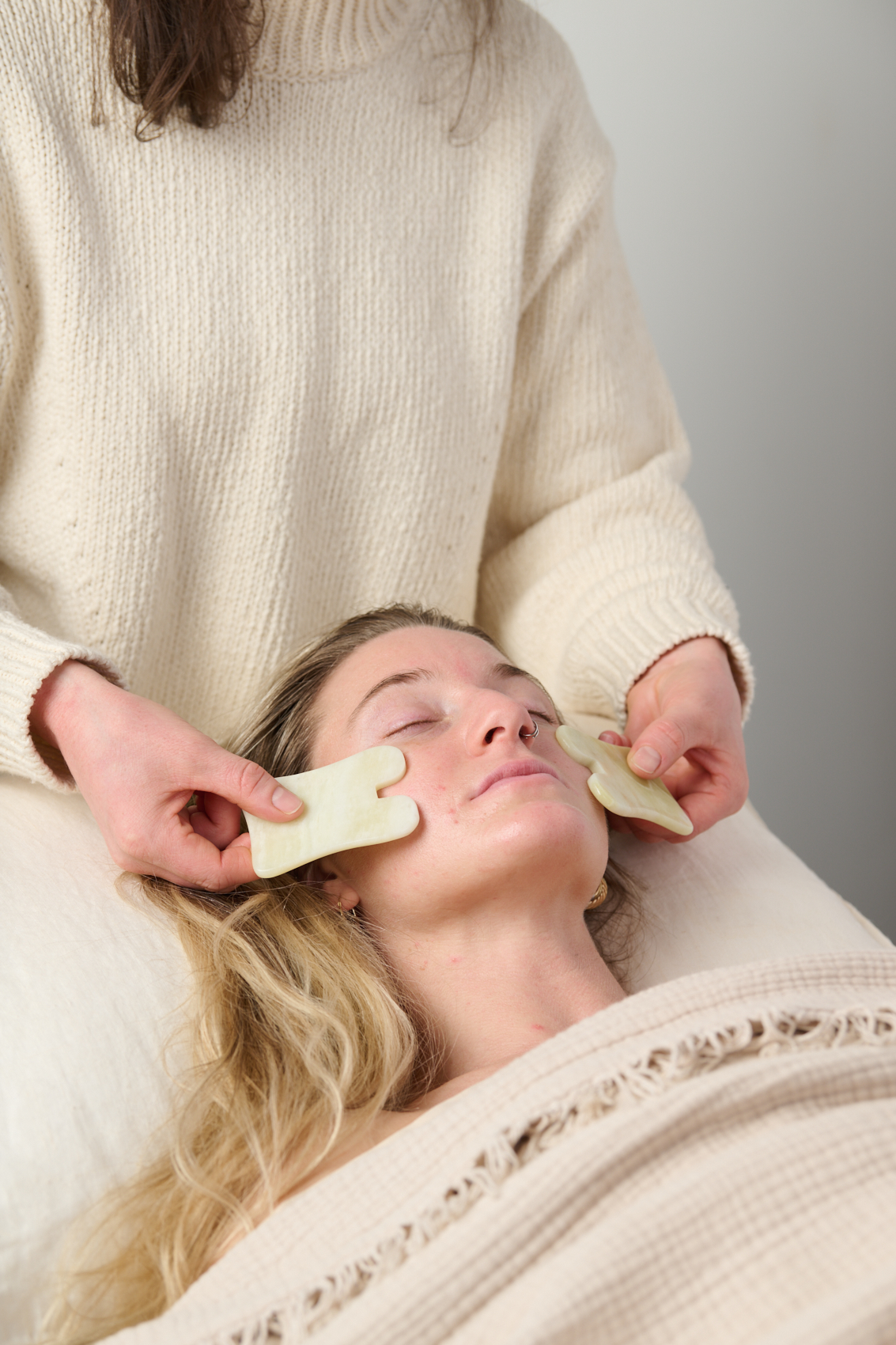
Understanding Petechiae: The "Sha" in Gua Sha
Petechiae are the small red, purple, or brown marks that appear on the skin during and after gua sha treatment. This is the “sha,” and it is a normal, expected, and intentional outcome of the therapy. They are created when the jade tool applies firm pressure along the skin, breaking open small capillaries just beneath the surface.
Similar to cupping, the therapeutic mechanism involves intentionally introducing a mild local stimulus to the tissue, prompting the body to send fresh blood and immune cells to the area as part of the healing response, clearing stagnation and promoting circulation.
The color of the sha is diagnostically significant in Chinese medicine:
- Bright red: fresh, active circulation; relatively healthy tissue
- Dark red or purple: blood has been stagnant in the area for some time; common in areas of chronic tension or old injury
- Brown or black: deep, long-standing stagnation
- Pale or no sha: tissue is relatively clear; less congestion present
Petechiae are not bruises; they do not involve the same tissue damage and typically resolve within 2–5 days. Patients should expect some surface redness or marking after treatment and can plan accordingly (e.g. avoid tight collars or clothing over treated areas that day).
Conditions We Treat with Gua Sha
Gua sha is used alongside acupuncture to address a range of musculoskeletal and pain conditions. It is particularly effective for areas of chronic tension, restricted mobility, and old injury.
- –Neck, shoulder, and upper back pain
- –Chronic muscle tension and restricted mobility
- –Scar tissue and soft tissue adhesions
- –Post-surgical recovery and healing
- –Joint pain and stiffness
- –Repetitive strain injuries
Gua Sha FAQs
What Our Patients Say
“Hannah, above all, is an intuitive, patient-focused practitioner. She listens carefully before and during treatments, and asks about how the time in between treatments went. I came to her with excruciating neck pain, and I had significant relief after just one treatment.”
— Wendy N.
“Hannah is a true healer. She is extremely knowledgeable and also follows her instincts. I have arthritis with two hips and knee replacements. She helped me so much pre and post surgery with pain management and swelling and scar healing.”
— Michella R.
“Hannah is an exceptional practitioner of acupuncture and Chinese medicine. She has helped me heal multiple injuries and unlock greater flexibility throughout my body. She is consultative, knowledgeable, and truly cares for the well-being of her clients. Very highly recommended.”
— Nick W.
“Hannah, above all, is an intuitive, patient-focused practitioner. She listens carefully before and during treatments, and asks about how the time in between treatments went. I came to her with excruciating neck pain, and I had significant relief after just one treatment.”
— Wendy N.
Ready to try gua sha?
Gua sha is incorporated into acupuncture sessions at Point Acupuncture. Book your first session or schedule a free introductory call to discuss your treatment goals.